Welcome to the blog of Indian 007

Like a beacon unto the world ...

Tuesday, January 24, 2012

CDC Increases Pressure on Parents to Vaccinate Kids with Deadly Toxins

Curt Linderman Sr., Infowars.com, January 16, 2012

Recently, the CDC, in coordination with HHS and state health departments, has been increasing the pressure on parents to vaccinate their children. In many cases, pressure has been brought on families with phone calls, school notes sent home and now it seems, knocking on your doors. In this video, Natomas, California school officials and a school nurse are seen going door to door trying to vaccinate school children that have not had one of the many DTaP vaccines recommended by the CDC schedule (1). While these school officials are more than likely, concerned about federal dollars that they will be refused for each child that is not fully vaccinated (2) there is little doubt that there is a far more nefarious agenda at hand.


NORC (National Organization for Research at the University of Chicago) is currently working closely with CDC to ensure that all of America’s children are fully vaccinated with the toxic, sickness inducing and physically and mentally debilitating cocktail of toxins, carcinogens, DNA animal fragments and viruses through the National Immunization Survey (3). Calls to your home will be coming soon if you have young children or even teenagers. These calls will most certainly begin with a nice voice at the end of the line asking questions and perhaps even exhibiting true and deep concern regarding the health of your child. In some cases, the actual operator/survey taker might even feel that they are performing a righteous task for the good of the nation and your children. That is the farthest thing from the truth.

So what is the vaccine agenda all about and why is the CDC “ramping-up” their efforts to vaccinate every American? The notion that vaccines are about preventing disease is the first mistake most people make. This might have been the case back when Jenner originally noted that milk maids exposed to cow pox were seemingly unaffected by the more lethal small pox, but this agenda changed dramatically in the early 1900s. In fact, the change in the underlying reasoning for vaccination was so dramatic and fantastically disturbing that even many of the citizens considered to be “awakened” to the globalist agenda cannot comprehend its diabolical nature. Perhaps this is a defense mechanism, I’m not sure, but you must understand the medical history of the past 100 years to truly see what is going on and where we are headed.

What most American’s in this country call “traditional” medicine today started with the Flexner Report of 1910 (4). Flexner was called on to research and write this report by the Rockefeller and Carnegie eugenics organizations that were also working with the early European Eugenics societies (5). The immediate agenda of this report was to control the citizens and ultimately the population numbers (through the eradication of minorities and the mentally deficient). The way to do this was to turn profits and attention away from the healing traditions of nutrition and homeopathy and swing it 180 degrees towards the petroleum and pharmaceutical industry agenda of sickness, indebtedness and death. The first casualties where the medical schools of the early 1900s: before the Flexner Report, there were 650 medical schools across the United States teaching the true healing arts. By 1918 there were 50 left. These remaining schools were the ones that dropped to their knees and offered to worship at the altar of eugenics, the Rockefeller and Carnegie religion.

Why the history lesson? Because we have to understand that the modern vaccination policies of the western world have never been about healing and protecting the citizens. Most of us understand that things are moving at an increasingly accelerated pace regarding the placement of the New World Order government and vaccines play a crucial role in this agenda. Reports of FEMA camps, TSA checkpoints on our streets and in our shopping malls, commercials encouraging neighbors to turn each other in to the authorities for violations or concerns are daily occurrences now. A strong, healthy and smart citizenry is the most dangerous threat to tyranny and vaccines are a major part of the NWO solution to this problem.

The increase in autism, asthma, juvenile diabetes, juvenile arthritis, ADD, ADHD, Primary Immunodeficiency Syndrome, the staggering numbers of cancers among our children and more, are caused by the industrial medical complex, creating a need for pharmaceuticals that turn our children into walking, sometimes talking, little drug addicted zombies that can be assured to simply walk into the FEMA camps without any hesitation whatsoever. Add to this, the recent heavy push within the CDC to ensure that young adults are getting their booster shots and the elderly are getting their flu / pneumonia and shingles vaccines (6) and you have a populace that will willingly give up their freedoms for relief from the maladies caused by their new masters.

NORC’s involvement with the CDC in the push to vaccinate every American citizen is extremely concerning. The very fact that NORC is a Chicago University based organization simply cannot be coincidental. Our socialist Commander-in-Chief and the horribly corrupt nature of Illinois politics have to play a factor. Further investigation into NORC and their affiliations illustrates the eugenic nature of the vaccine agenda as if we were once again reading from the Rockefeller/Carnegie, eugenics inspired, Flexner Report. 

NORC’s “selected Clients” page on their website(7) reads like a Who’s Who of the corporate greed and eugenics movement. Firms and organizations like; The Bill and Malinda Gates Foundation, JP Morgan Chase Foundation, Kaiser Family Foundation, AMA, Children’s Hospital of Philadelphia, U.S. Dept. of Justice and interestingly enough, foreign partners such as Deutsche Invest und Entwicklungsgesellschaft (DEG), George Soros’ Open Society of Europe, The European Bank for Reconstruction and Development as well as The Global Development Network.

Even if you haven’t looked closely into the numerous vaccine controversies, if you have a fundamental understanding of the New World Order and what they have in store for us, the CDC’s partnership with NORC and their need for ensuring that every American get vaccinated should be enough to do exactly what the woman in the above video clip did when they come to your doorstep: Tell them to &^%$ off and slam the door!
1. http://www.youtube.com/watch?v=38V_31p7jPI
2. http://www.whale.to/vaccines/aaps.html
3. http://www.norc.org/Research/Projects/Pages/national-immunization-survey.aspx
4. http://jama.ama-assn.org/content/291/17/2139.full
5. http://www.eugenics-watch.com/roots/chap12.html
6. http://www.cdc.gov/vaccines/vpd-vac/adult-vpd.htm
7. http://www.norc.org/About/Pages/representative-clients.aspx
 Source: Infowars.com

Sunday, January 22, 2012

The worst thing about SOPA


Have you heard of the Golden Mean Fallacy?  I would link to the Wikipedia page, but they’re blacked out today, so here’s an excerpt from its description:
…a logical fallacy which asserts that given two positions there exists a compromise between them which must be correct.  [It] implies that the positions being considered represent extremes of a continuum of opinions, and that such extremes are always wrong, and the middle ground is always correct. This is not always the case. Sometimes only X or Y is acceptable, with no middle ground possible. Additionally, the middle ground fallacy allows any position to be invalidated, even those that have been reached by previous applications of the same method; all one must do is present yet another, radically opposed position, and the middle-ground compromise will be forced closer to that position.
I added emphasis to a very important part of the explanation.  All you have to do to make something bad look good is come up with something even worse to compare it to.  And given the human capacity for imagination, that’s not such a difficult task.

You’ve probably heard of SOPA and Protect-IP by now.  Pretty much everyone who looks at these bills, outside of the entertainment industry, agrees on a few simple points:
  1. These bills would give private corporations the power to censor the Internet
  2. These bills are unconstitutional, as they violate the 1st amendment
  3. These bills are evil and need to be stopped
Well, there’s some good news, and some bad news.  The good news is that as more and more people are finding out about them, they’re talking to their congressional representatives, and it looks like support for these bills is falling.  It’s looking likely that they won’t pass.

The bad news is the Golden Mean Fallacy.  Take a look at Stop American Censorship, one of the sites that’s working to coordinate the opposition to this legislation.  Check out the quotes down at the bottom, from experts on the subject.  I was a bit horrified to see multiple people saying, in effect, “the DMCA is OK, but this goes too far!”

That’s the Golden Mean Fallacy talking.  If we accept the Digital Millennium Copyright Act as legitimate, we’ve already lost.  It’s every bit as unconstitutional and every bit as evil as SOPA, and to be honest I’m  shocked that it’s apparently never been subject to judicial review on 5th or 14th amendment grounds.  You probably know of the 5th amendment as the one that says you can “take the 5th” in court, meaning that you have the right to not incriminate yourself.  But it also guarantees that you cannot “be deprived of life, liberty, or property, without due process of law.”  The 14th amendment reiterates the whole “due process of law” thing, applying it to the states as well as the federal government.

In layman’s terms, we have a guarantee, repeated twice, in the Bill of Rights that nobody can be punished for a crime without due process of law, which means (among other things) that they have the right to a fair trial.  This is just as important as a foundation for our freedoms as the First Amendment, and the DMCA tramples all over it.

How does a copyright act trample on the right to due process?  I know it sounds strange at first, but the DMCA is a strange law.  It allows copyright owners to send takedown notices to allegedly-infringing Internet sites, claiming that they are hosting infringing material.  Under the law, this material must be removed right away, unless the owner believes that no infringement is taking place and is willing to start a fight over it.

This may not sound too unreasonable, until you realize that it puts the burden of proof on the accused.  It throws one of our most sacred legal traditions, the presumption of innocence (aka “innocent until proven guilty”) out the window.  Now you’re guilty, by default and without a trial, until proven innocent!  You need look no further than chillingeffects.org to see the damage that this is doing, by allowing copyright holders to make false or exaggerated copyright claims and get away with it.  The presumption of innocence and the right to due process exists for a reason!

But the DMCA does even worse than that: it also allows the use of DRM technology.  Have you ever had a problem activating a program that you legitimately bought?  Something goes wrong and you can’t use it even though you’ve paid for it and done everything right?  Then you can see the problem here.  It’s like the takedowns, but even worse, as you have no way to fight it.  The DRM software is unaccountable.  If it has a bug, (and all software has bugs,) you’re not innocent until proven guilty.  You’re not even guilty until proven innocent.  You’re simply guilty, and screw the proof!  It doesn’t matter if you actually broke the law or not, the copyright owner’s interpretation of the law is enforced upon you and there’s nothing you can do about it.

So the worst thing about SOPA is not SOPA at all.  It’s the opportunity it provides for the Golden Mean Fallacy to legitimize another piece of equally-evil legislation.  Until the DMCA is repealed, and not only repealed but reversed, giving DRM technology the legal status it truly deserves, which is that of malware with no legitimate use, problems like SOPA will continue popping up again and again, because it’s built on the foundation of rights abuses codified by the DMCA.

Wikipedia is blacked out today, replacing its articles with a page urging people to contact their Congressmen in opposition to SOPA.  That’s a good gesture, but ultimately meaningless.  SOPA is getting enough opposition now that it’s not going to pass.  We’ve already won this battle.  What people need to contact their congressmen about is rooting out the source of this abuse.  “Repeal and reverse the DMCA,” not “stop SOPA,” needs to be the soundbite on people’s minds if we’re to truly protect our freedom in the Internet Age.

Source: TURBU Tech

Sunday, January 15, 2012

How to Disappear Completely (From the Internet)

Leaving the Web behind might just be the key to your privacy—and sanity.

by John Herrman, Popular Mechanics

If you’ve ever used the Internet, you have an online identity. Maybe it’s slight: a Hotmail account here, a comment on a news story there. Or maybe you’ve been more prolific, leaving a trail of usernames, accounts, messages, and profiles across the digital landscape. In any case, an active internet user owes it to himself to do a bit of self-Googling. What you’ll find will be both enlightening and humbling—even worrying.

Unease about your online identity shouldn’t be limited to how much information is publicly available. Online advertising is the engine that drives the Internet’s largest sites, including Google and Facebook, and it depends on your personal—and allegedly private—data for fuel. "The government, companies, and marketers all want us to share as much information as possible because that’s what’s good for them," says Rebecca Jeschke of the Electronic Frontier Foundation, "and it’s time to think of what’s good for us."

While most Internet users seem fine with privacy tradeoffs, the lack of control will lead some to consider the nuclear option: total Internet evacuation. But taking yourself offline isn’t as simple as logging out—it requires a little bit of work. Here’s how.

Popular Sites

When a website is new, the last thing its creators are thinking about is how to help users leave. Thankfully, many of the Internet’s largest identity properties—Facebook, Google, Amazon, and Microsoft—are fairly mature and have evolved enough to offer well-defined, if well-hidden, escape plans.

If you’ve ever used Gmail, Google Docs, Google+, or Picasa, to name a few, then you have a Google account. Google accounts can contain an astounding amount of personal data—check google.com/dashboard to see exactly how much—but removing it is a straightforward process. Before you hit the switch, be sure to back up any information you want to keep—a Google account can be recovered for only a few months after its deletion. Google doesn’t have a software tool for exporting data from its services, but most services have their own, typically found under the settings menu on the upper-right-hand side of the screen. As with other webmail services, the easiest way to back up your Live or Hotmail messages is to add your account to a mail app such as Outlook or Apple’s Mail before deletion—this will have the added benefit of backing up your contacts.

Once you’ve copied your important data offline, navigate to your Google account dashboard (google.com/accounts). Next go to My Products, and click Edit. Then select Close Account and Delete All Services and Info Associated With It. You’ll be presented with a list of Google services that you’ve used in the past. (In my case, this included three that I didn’t remember signing up for.) Check the box next to each, along with the two are-you-really-sure boxes at the bottom, and select Delete Google Account. The account will be instantly wiped from the public Internet, but the company warns on its website that "residual . . . accounts may take up to 60 days to be deleted from our active servers and may remain in our backup systems," but not be accessible in any way, "for an additional period of time."

Until 2008, there was no obvious way to permanently delete your information from Facebook. Instead, there was a Deactivate option only, which removed your profile from public view but left it on Facebook’s servers indefinitely. Thousands complained, so Facebook built a tool for permanently and instantly deleting user data—then promptly hid it away in the site’s Help section. To access it, log in to Facebook, navigate to facebook.com/help, and type "delete my account" in the search box. The top result will link you to the deletion page. Click Submit and confirm your choice, and you’re done. While Facebook doesn’t offer much help for backing up your data—a particular concern if you use Facebook to hold your photo collection—there are a number of free Facebook apps designed to archive your albums, such as Facebook Exporter for iPhoto and FBPhotoExport.

To pull yourself free from Microsoft’s services, go to account.live.com and scroll to the bottom of the page. Under the Other Options header, click Close Account. On the following page, reenter your account password and press Yes. Unfortunately, there is no account-wide export option.

Closing an Amazon account is a more roundabout process. Click Help in the upper-right-hand corner of any page on amazon.com and search "closing your account." On the resulting page, pick Contact Us, then click on Something Else. Below that, select Account Settings from the menu, then Close My Account. At the bottom of the page, click Send Us an Email, fill out the form, and send.

Smaller Sites

Most reputable websites will offer some sort of account deletion option. Smaller sites that have posted (or more likely, reposted) your data without your permission can prove more difficult; after all, the owners never had your permission to republish your blog posts, photos, or videos in the first place. Finding this type of information—or derogatory and misrepresentative comments about you—is no more difficult than doing a search on Google or Bing. (Be sure to place quotation marks around your name.)

Searching for yourself isn’t about narcissism; it’s not unusual for job recruiters, current employers, or even potential dates to vet new acquaintances on search engines. A misleading search result or libelous information could cause serious distress and do damage to your reputation.

On a smaller site, sending a direct request to a webmaster to pull infringing or upsetting material is your best course of action. if there is no prominently listed con- tact information for the site’s operator, or if you aren’t able to get a response from the listed address or phone number, you can find direct contact information for the site’s administrator by conducting a search on whois.net. Domain owners are required by the internet Corporation for assigned names and numbers to supply contact information for Whois searches, including a phone number. This may at least get you on the phone with someone or give you a working email address. Whether that will be of any help is a different story.

If a site refuses to take down content that belongs to you, you can try sending a takedown notice. Under the Digital Millennium Copyright act (DMCA), you are entitled to have infringing content—images, text, or video that you own, specifically taken down. There are a number of forms available online for submitting DMCA notices to internet hosting companies; there are even forms for asking Google, Yahoo, and Bing to remove content from their search results. While these forms don’t guarantee cooperation, the mere threat of legal action will at least be enough to get a site owner’s attention. if your DMCA notice doesn’t get a response, it might be time to talk to a lawyer.

The Data That Won’t Die

It’s easy to tell when your data has been removed from public display; if you can’t find it anymore, then it’s effectively gone. Finding out whether or not a company is still holding your data privately—or selling it to third parties—may be impossible. "There’s no way to verify that your information has been deleted," Jeschke says, nor is there an overarching law or regulation governing data retention. Some data simply can’t be reclaimed; you relinquished control the moment you hit Submit, after you clicked past that 50-page license agreement.

This is a valuable lesson, and while it might not help you seize full control of your online identity, it’s instructive. When you sign up with a service, make sure you trust its parent company and understand what data you’re giving up. To sign up with Google or Facebook is to sell yourself in a literal way; as an astute (and anonymous) poster on the news site MetaFilter wrote, "if you are not paying for it, you’re not the customer; you’re the product being sold."

A WEB APP TO END ALL WEB APPS

Signing up for social media sites is, by design, almost entirely frictionless. Three or four clicks will get you in the door, but finding your way out takes significantly more time and effort. The Web 2.0 Suicide Machine (tagline: Meet Your Real Neighbors Again) is a one-shot tool for deleting your profiles from some of the largest social sites on the Web, including Twitter, Myspace, LinkedIn, and Facebook.

The tool was released last year by the New Media Lab in Rotterdam, the Netherlands, and still lives up to its name—with one exception. Facebook has taken action to disable the site’s “suicide” script, and even sent the creators a stern cease-and-desist letter, demanding that Facebook be exempted from its deletion tools. Among the concerns included in Facebook’s legal letter? “[T]he protection of users’ privacy.”

CHOOSING AN ONLINE PRIVACY TOOL

Private Browsing

This feature is included in most new Internet browsers and goes by a few different titles: Private mode, Incognito mode, and InPrivate. All these names are a bit of an overreach: This mode prevents Web browsers only from collecting history and cookies. It keeps other users of your computer from seeing what you’ve been doing (buying gifts being the most palatable example); it won’t shield your IP address or existing cookies from external sites.

Virtual Private networks

Paid virtual private network (VPN) services route your Internet traffic through an intermediary, masking your computer’s address from the sites you visit. Sites will, however, still be able to deposit tracking cookies on your computer, and your browser will still be prone to exploits and viruses. VPNs reroute all Internet traffic on your computer, not just from Web browsers, which makes them popular with file sharers. Reputable services include WiTopia and Blacklogic.

CoCoon (getCoCoon.Com)

This service is a plug-in for the free Firefox browser that combines the advantages of private browsing and a VPN with extra security features. Traffic is routed through remote servers and made anonymous, and all incoming files—downloads or websites—are scanned for viruses and malware. Other features include throwaway email addresses for spam prevention, and full portability, so you can access your Cocoon account from other computers.
 

Saturday, January 14, 2012

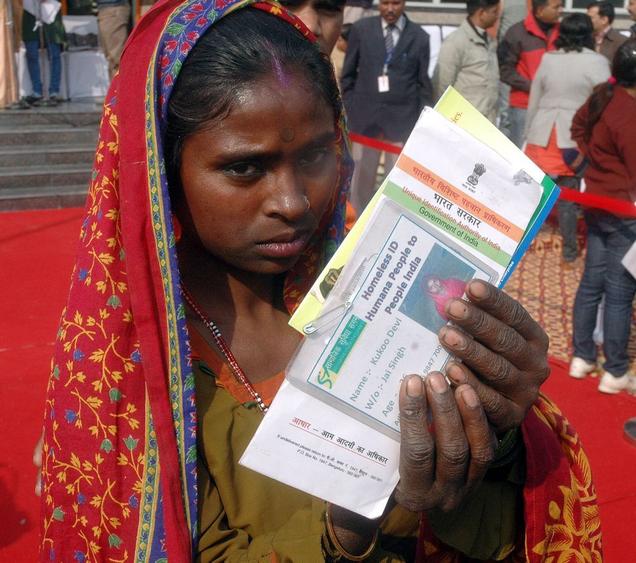
Cashless Society: India Implements First Biometric ID Program for all of its 1.2 Billion Residents

by Brandon Turbeville, Activist Post

Source
Over the past few months, I have written several articles dealing with the coming cashless society and the developing technological control grid. I also have written about the surge of government attempts to gain access to and force the use of biometric data for the purposes of identification, tracking, tracing, and surveillance.

Unfortunately, the reactions I receive from the general public are almost always the same. While some recognize the danger, most simply deny that governments have the capability or even the desire to create a system in which the population is constantly monitored by virtue of their most private and even biological information. Others, either gripped by apathy or ignorance, cannot believe that the gadgets given to them from the massive tech corporations are designed for anything other than their entertainment and enjoyment.

However, current events in India should serve not just as a warning, but also as a foreshadowing of the events to come in the Western world, specifically the United States.

Recently, India has launched a nationwide program involving the allocation of a Unique Identification Number (UID) to every single one of its 1.2 billion residents. Each of the numbers will be tied to the biometric data of the recipient using three different forms of information – fingerprints, iris scans, and pictures of the face. All ten digits of the hand will be recorded, and both eyes will be scanned.
 
The project will be directed by the Unique Identification Authority of India (UIDAI) under the premise of preventing identity theft and social welfare fraud. India has rather extensive social welfare and safety net programs, ranging from medical support and heating assistance to others aimed at helping the poor. Fraud is a rampant problem in India, especially in relation to these programs due to a preponderance of corrupt politicians and bureaucrats who often stuff welfare rolls with fake names and take the money for themselves.

Yet, although the justification for the billion person database is the increased ability to accurately disperse social welfare benefits, it will not be just the Indian government’s social welfare programs that have access to and utilize the UIDAI. Indeed, even before the program has been completed, major banks, state/local governments, and other institutions are planning to use the UIDAI for identification verification purposes and, of course, payment  and accessibility.


Yet the UID is going to be used for much more than social welfare programs. The UIDAI is in discussion with many institutions (banks, local/state governments, etc.) to allow them to use the UID as a means of identity verification. These institutions will pay the UIDAI some fee to cover costs and generate revenue. There seems to be little doubt that once it is established, the UID will become a preferred method (if not the preferred method) of identification in India.
Saenz also sees the eventuality of the UIDAI program becoming a means of payment and accessibility. He continues:

Ultimately, I wouldn’t be surprised if the UID, with its biometric data, could be used as a means of payment (when linked to a bank account), or as an access key to homes and cars. Purchase a meal with your fingerprint and unlock your door with the twinkle in your eye. Similar results could be expected in other nations that adopted biometric identification systems.
Saenz, and other proponents of the UID (UIDAI), have been diligent in pointing out that the program “is just a number, not an ID card.” However, this claim is debatable. Saenz himself admits that State issued driver’s licenses and identification cards will reference the UID information.

The question then becomes how much of that information will be referenced, and how that will be accomplished? Will the information be included on the card? Will only part of the information be included on the card? Or will the card reference back to the digital UID information to be then reconciled with the information that is present on the card? Although the UID is obviously going to be utilized by other institutions outside of the social welfare programs, no answers to these questions have been provided.

But, in the end, does it really matter if the information is collated into an ID card format if the government already has access to that information digitally? More than likely, a national ID card will appear as a supplement to the database already created by UID.  Regardless, the private biometric information has still been taken from the individual. The database is still there.

Indeed, government “officials” have already stated that the database will be used by intelligence agencies for the purpose of monitoring “bank transactions, cellphone purchases and the movements of individuals and groups suspected of fomenting terrorism.” This will be very easy to do since the UID number will be entered anytime an individual “accesses services from government departments, driver’s license offices and hospitals, as well as insurance, telecom, and banking companies.”

Nevertheless, proponents have also touted the fact that, at this point, the UID program is optional. But the program will obviously not be optional for very long. As I have discussed in previous articles, the introduction of a program such as a national ID card, biometric data, or cashless payment technologies is always followed by the program becoming mandatory. The ultimate goal of an all-encompassing cashless surveillance program with no opt-out provisions is always introduced by stealth and the Gradualist Technique.

At first, the program is introduced as a way to speed up transactions, increase efficiency, and provide convenience. Soon, however, governments and businesses begin to transition out of the older methods of payment and identification and focus more on the new technology. Identification using the traditional methods remain as an option, but become viewed as cumbersome. Eventually, the alternative methods are phased out completely and mandates replace what was once a personal choice.

As soon as Indian banks, businesses, and government social service offices begin to require identification using the UID, the ability to remain off the system and lead what passes for a normal life will disappear.

This is exactly the intention with India’s new biometric ID program. In fact, the cashless society is a stated goal of the UID program. CEO of MindTree’s IT Services, the company that was awarded the government contract for development and maintenance of the UID, explained in an interview with ComputerWeekly that the “ID scheme will support a cashless society. He said all vendors will have a biometric reader and citizens can pay for things with a fingerprint scan. Even a bag of rice.”

No doubt, even after such an admission by a man who was instrumental in the development of the program, many who read this article will still dismiss it as a “conspiracy theory.”

Nonetheless, this new monumental data mining effort by the Indian government dovetails with recent efforts in the Western world to develop an electronic surveillance grid capable of tracking, tracing, and recording every single movement and communication of every single citizen within a nation’s borders.

New technologies which are being introduced inside the United States, the UK, and Australia such as vein scanners, biometric employee time and attendance systems, voice recognition devices, and behavior analysis systems are all geared toward Total Information Awareness of every human being on the planet.

Only a totalitarian form of government would desire this information; and only a very determined totalitarian government would actively work toward establishing it. India is only the first nation to openly sweep up its entire national population into such a massive biometric database net. We cannot let our nation be the next. 

Brandon Turbeville is an author out of Mullins, South Carolina. He has a Bachelor’s Degree from Francis Marion University where he earned the Pee Dee Electric Scholar’s Award as an undergraduate. He has had numerous articles published dealing with a wide variety of subjects including health, economics, and civil liberties. He also the author of Codex Alimentarius - The End of Health Freedom, 7 Real Conspiracies and Five Sense Solutions. Brandon Turbeville is available for podcast, radio, and TV interviews. Please contact us at activistpost@gmail.com.